
Teeth and bite · Suitability · Daily responsibility
Invisalign clear-aligner assessments in Calgary
Clear aligners use a prescribed series of removable appliances to move teeth, but they are not appropriate for every tooth movement or bite. Start with an examination of your oral health, teeth, bite, goals, reasonable options, limits, daily responsibilities, retention needs, care roles, and expected fees.
- Your dentist
- Dr. Michael Wu, General Dentist
- Hours
- Open from 7 AM on weekdays
- Insurance
- Direct billing, most plans
- Fees
- Explained before treatment begins
Pain, swelling, injury, something broken, or a lost filling or crown?
For current pain, swelling, injury, or worsening symptoms: Call (403) 313-3000 during clinic hours for current urgent availability. Do not wait for a planned clear-aligner request response.
Start with the tooth-position or bite change you want to discuss
You may want to discuss crowding, spacing, a tooth that sits out of line, how the upper and lower teeth meet, a change noticed over time, or the appearance of the teeth. These concerns do not all have the same cause, significance, or treatment path.
An assessment may support clear aligners, another orthodontic approach, treatment of an oral-health concern first, restorative or cosmetic discussion, referral, monitoring, or no treatment. Asking about Invisalign does not mean that clear aligners are required or suitable.

The examination determines whether clear aligners deserve consideration
Dr. Wu reviews the concern and goals, relevant health and dental history, teeth, gums, existing dental work, tooth position, and how the upper and lower teeth meet. Records may be recommended when they are clinically useful. The findings guide which options, limits, and care roles should be discussed.
- Teeth and gumsActive decay, gum inflammation or disease, unexplained pain, loose teeth, or another oral-health concern may need assessment or care before elective tooth movement is considered.
- Tooth position and biteCrowding, spacing, rotations, missing teeth, existing restorations, and the way the teeth meet can affect whether clear aligners, another appliance, combined care, or referral is more appropriate.
- Jaws, growth, and treatment limitsSome bite concerns involve more than the position of individual teeth. Age, growth, jaw relationships, and the movements required may change the available options.
- Clinically useful recordsThe assessment may require photographs, models, impressions, digital records, or X-rays when clinically useful.
Source: Canadian Dental Association, Orthodontics; Canadian Association of Orthodontists, Orthodontic Treatment; Canadian Association of Orthodontists, Braces
Confirm the plan, responsibilities, monitoring, and retention
The steps below are general. The clinic confirms the proposed plan and care roles after assessment.
Define the concern and treatment goals
Review which teeth and bite relationships are being considered, what the treatment is intended to change, what may remain unchanged, and which functional or appearance goals matter to you.
Confirm oral health and collect useful records
Address active tooth or gum concerns and obtain the records needed to assess the bite and plan possible tooth movement. Ask why each record is recommended and how it will be used.
Compare the proposed plan with reasonable alternatives
Ask why clear aligners are being considered, which movements may be difficult or unsuitable, whether another appliance or referral is reasonable, and what choosing no treatment would mean.
Confirm the appliances, instructions, and care roles
Ask who plans and monitors treatment, which aligner system is proposed, how wear and changes are prescribed, and whether attachments, elastics, enamel adjustment, other dental care, or referral may be needed.
Review monitoring, completion criteria, and retention
Ask how progress and aligner fit will be checked, what could change the plan, how active treatment is considered complete, which retention approach may follow, and what is included in the estimate.
Source: Canadian Association of Orthodontists, Braces; American Association of Orthodontists, Common Myths About Orthodontic Treatment; Canadian Association of Orthodontists, Retainers
Removable treatment still requires consistent professional oversight
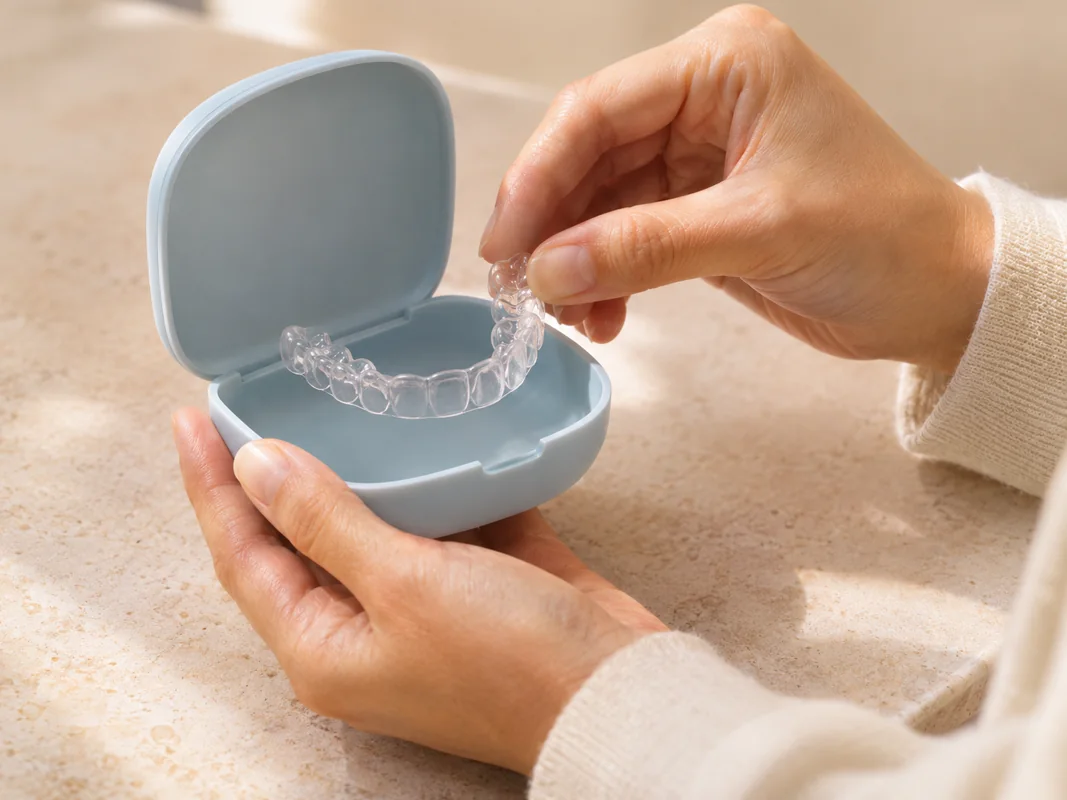
Clear aligners can be taken out, but removal does not make the treatment self-directed. Follow the individual instructions for wear, aligner changes, meals and drinks, cleaning, storage, oral hygiene, and follow-up. Do not advance, alter, replace, or stop an aligner sequence based only on general website information.
- Follow the prescribed wear and change instructionsThe provider determines how long each aligner is worn and when to move to the next one.
- Keep the teeth, gums, and aligners cleanFollow the approved brushing, cleaning-between-teeth, aligner-cleaning, removal, and storage instructions. Contact the provider if cleaning is difficult or the gums, teeth, or mouth change during treatment.
- Attend the recommended monitoringProfessional review helps assess oral health, aligner fit, tooth movement, and the bite. The plan may need to change if teeth do not move as expected, an appliance stops fitting, oral health changes, or another concern develops.
- Call about a problemContact the treating provider about a lost, cracked, warped, sharp, or poorly fitting aligner, persistent irritation, unexpected tooth movement, or pain that is not improving. For current swelling, injury, severe or worsening pain, or another urgent concern, call the clinic during clinic hours for current urgent availability.
Source: American Association of Orthodontists, Clear Aligners; American Association of Orthodontists, Common Myths About Orthodontic Treatment
Active tooth movement is not the final stage
Teeth can shift after orthodontic treatment. The Canadian Association of Orthodontists advises that retention is important for holding the result and that retainers should be worn as instructed. The suitable retainer type, wear instructions, monitoring, replacement policy, and fee depend on the individual plan.
Ask about the proposed retention approach
Review whether a fixed, removable, or combined approach may be considered, who provides and monitors it, and what is included in the estimate.
Follow the individual wear and care instructions
Retention is effective only when the prescribed appliance is used and maintained as directed. Ask how to clean and store it and which changes should prompt contact.
Contact the provider if the retainer changes
A retainer that is lost, damaged, warped, painful, or no longer fits needs professional advice. Do not force an appliance or rely on a general website schedule.
Is the goal about appearance rather than position?
Cosmetic Dentistry covers the broader discussion of appearance goals, oral health, realistic options, and limits.
Cosmetic DentistryAsk what the assessment, treatment, and retention estimate include.
Invisalign consultations are available at the clinic. Fees depend on the examination findings, the care recommended, and the treatment you choose. Assessment, records, case complexity, appliances, monitoring, additional dental care, lost or replacement appliances, changes to the plan, retention, and referred care may affect the estimate. Ask which provider and stage each estimate covers and whether additional aligners, replacement aligners, and retainers are included.
Orthodontic coverage may be separate from other dental benefits. Your plan determines eligibility, coverage, age limits, maximums, exclusions, predetermination requirements, reimbursement, and whether the insurer pays the clinic directly. We can help submit eligible claims or estimates. You are responsible for any amount not paid by your plan.

Confirm who assesses, plans, monitors, and retains the result.
Dr. Michael Wu is a general dentist. If your case requires care outside the clinic's scope, the team will explain the referral and how the stages connect.
About Dr. Michael WuPatients
Came in for a check up since I'm in the area and was greeted with smiles all around. Had a great experience with the front desk staff and the dentist himself. Everyone was very personable, friendly and explained exactly what was going on with my mouth. Will definitely be back for the rest of my dental needs!
Chris Postnikoff Absolutely phenomenal dental office! Everyone is so friendly, accommodating, and knowledgeable about their work. I’ve been to many dental offices that care very little about their patients, but Dental at the Bow is certainly not one of them. Very glad I decided to start coming here.
Evan Poulson Great for all dental needs! I started coming here right after they opened, it is so convenient if you work in the area. Modern tech, friendly and efficient team.
Lucy Vincent-Smith
Commonly Asked Questions
If your question is not answered here, call the clinic and the team will answer it.
What Invisalign details should I confirm with the clinic?
Invisalign consultations are available at the clinic.
Ask who provides each stage, which records and tools are used, how treatment is planned and monitored, what retention approach applies, and what the estimate includes.
Are Invisalign clear aligners suitable for every bite or tooth movement?
No. Clear aligners can address some orthodontic problems, but not all.
The teeth, gums, bite, jaws, goals, movements required, existing dental work, and ability to follow the plan affect which options deserve consideration.
Will I need X-rays, photographs, impressions, or a digital scan?
Records are selected when they are clinically useful for examination, diagnosis, and planning. Ask which records are recommended and why.
How many hours a day would I wear the aligners?
The treating provider prescribes wear for the individual plan. Follow the instructions supplied for your care.
Can I remove clear aligners for meals and cleaning?
Clear aligners are removable, but removal and reinsertion need to follow the prescribed instructions.
Ask how to manage meals, drinks, brushing, cleaning between the teeth, aligner cleaning, and storage for the proposed appliance.
How long does Invisalign treatment take?
No duration is promised. The concern, bite, movements required, oral health, treatment approach, appliance wear, monitoring findings, changes to the plan, and retention needs can affect the sequence and timing.
Start with the teeth, bite, responsibilities, and realistic limits.
Request an Invisalign assessment to review your goals, oral health, teeth, bite, clinically useful records, clear-aligner suitability, alternatives, prescribed wear, monitoring, retention, care roles, and expected fees. The clinic will call to confirm your consultation and answer questions about the next steps. For current pain, swelling, injury, or worsening symptoms, call (403) 313-3000 during clinic hours for current urgent availability.

